Why Fast, Helpful Email Follow-Up Matters for Financial and Insurance Advisors
ReliableReads Editorial Team
Prospect Match
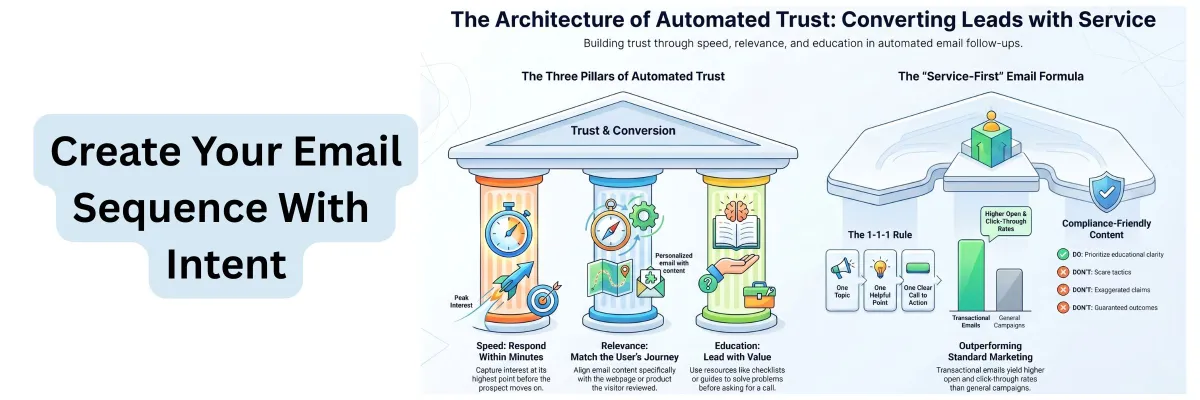
When someone visits your website, reads an article, or looks at a product page, they are showing interest — but they may not be ready to talk yet. That is why automated email follow-up matters. The goal is not to pressure them. The goal is to be helpful, timely, and relevant to the topic they were already reviewing.
The first email should feel like a service, not a sales pitch. Instead of saying, “I saw you were on my website,” send a useful resource tied to their interest. A retirement income visitor may need a checklist. An insurance visitor may need a coverage gap review.
The data supports this approach. Automated and transactional emails perform better than standard marketing emails because they are connected to a specific action. Current benchmark data shows these emails generate stronger open rates and click-through rates than general campaigns. That matters because the message reaches the person closer to the moment of interest.
This is especially important in financial and insurance services. These are trust-based industries, and people often need education before they schedule a call. When the email matches the topic they viewed, it feels more useful and less intrusive.
Speed is another important factor. Research on web-generated leads has shown that responding within the first few minutes can improve the chance of making contact. That does not mean the message should feel rushed or aggressive. It means the advisor should have a helpful response ready when interest is highest.
The strongest follow-up emails usually follow one simple rule: one topic, one helpful point, and one call to action. People do not want a long explanation of every product or service. They want to know whether you understand their question and can help them take the next step.
The message should also match the page they visited. A Medicare visitor may need enrollment timing help. An annuity or IUL visitor may need a plain-language guide. A quote page visitor may need a fast reply and a clear way to schedule a short conversation.
For financial and insurance professionals, compliance-friendly language matters. Follow-up emails should educate first. Avoid scare tactics, exaggerated claims, promises of returns, or guaranteed outcomes unless the language has been approved.
The bottom line is this: people do not want to feel tracked — they want to feel helped. When your email follow-up is fast, relevant, and educational, you give prospects a reason to trust you before they ever schedule a call.